Showing posts with label Book Reviews. Show all posts

Saturday, October 19, 2013

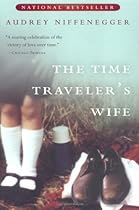
The Time Traveler's Wife by Audrey Niffenegger

Overall rating:
The Time Traveler’s Wife is an entertaining novel. It may not be one of the future classics of American literature but it touches the always fascinating subject of time traveling.
Claire and Henry met each other in 1991 when Claire was 20 and Henry 28 years old. In reality Claire already met Henry when she was 6 and he was in his mid-thirties. It is a love story that lasts for the entire life of one partner and for a set time for the other. 
I have mixed feelings about this: on one hand it is fascinating to get to know your soul mate all your life; on the other hand, it takes away the element of surprise and it puts you in a permanent ‘waiting’ mode.
Ms. Niffenegger, the writer, hints at the fact that time travelers may be a different, and maybe more evolved, species of humans. Of course, there are always ethical issues to consider… For example, imagine that someone goes to 1970 and leaves a tablet behind. What would be the reaction and how could that change the course of history? What about giving your past self advantageous information? I guess that a super human would be possible after all. 
I have to admit that I am dense when it comes to understanding parallel universes, time continuum and traveling, and anything about advance Physics. I always think, how would the people in the past be still alive if I go there from my present?
This book is available in paperback.
Originality:
Beauty and use of language:★★★

Thursday, September 12, 2013

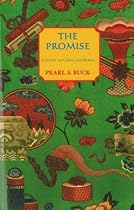
The Promise by Pearl S. Buck

Overall rating:★★
Lao San was the Third son of Ling Tan, a farmer in a village in China, and his wife Ling Sao. Mayli was a futile young woman raised in the US by her father. The Promise is the love story during times of war of these two characters.
Lao San decided to leave his village and join the rebels to liberate his country from the Japanese invasion. His connections landed him in the military and as he ascended in the hierarchy he obtained, among other benefits, a new name: Sheng.
Mayli was bored with her comfortable life in the US and decided to return to China searching for her roots and her identity. She had a somewhat relaxed existence in China as well. This uneventful life pushed Mayli to join the army as a nurse.
Sheng’s division was sent to rescue a British-America platoon that got trapped in Burma during World War II. Little did he know that Mayli was in the same division with the rest of the nurses and doctor that accompanied the soldiers in that mission. The assignment was extremely difficult and, in my opinion, not successful. At the end of the day, the Westerners showed their true colors… in all shades.
This book is available in paperback.
Originality:★★
Beauty and use of language:★★

Tuesday, September 3, 2013

1Q84 by Haruki Murakami

Overall rating: ★★★★
Aomame was on her way to “work” when the taxi got into a traffic jam on the Metropolitan Expressway. Traffic was not moving and Aomame could not be late, not for this job anyways. The driver suggested she got off through the emergency staircase that would take her to street level; from there she could take the subway and arrive at her destination on time. Aomame decided she didn’t have anything to lose and followed the taxi driver’s advice.
Tengo was a math teacher on a school and a part time writer for a magazine. His editor, Komatsu, received an interesting story for a contest his magazine sponsored. Komatsu proposed Tengo to meet with the author, 17-year old Fuka Eri, and rewrite (polish) the novel so it could enter, and win, the contest.
These two events took Tengo and Aomame to the year 1Q84, for Aomame where Q stood for question, and to the town of cats for Tengo. What made 1Q84 different to 1984? For starters there were two moons in 1Q84 as well as the existance of the Little People.
In this novel, or should I say epic novel, Haruki Murakami takes the readers through an intrisic world where reality and fantasy are intertwined. The characters have depth, a great deal of introspection, and the book presents a number of philosophical and ethical questions that make us examine our own convictions.
This book is available in paperback and Kindle.
Originality: ★★★★
Beauty and use of language: ★★★★

Monday, August 26, 2013

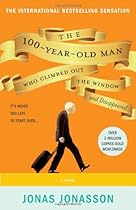
The 100-Year Old Man Who Climbed Out the Window and Disappeared by Jonas Jonasson

Overall rating:★★★★
Allan Karlsson decided to escape the senior citizen home on the day of his 100th birthday. He had one problem with the place: too many rules – no alcohol, no cigarettes, and all meals at the same time and all tasteless. Allan wanted to buy some vodka, after all it was his birthday and not every day one gets to become 100 years old.
After he jumped out of the window of his room (on the first floor) he decided to go to the bus station and take a bus far away from the home. At the station he meets a much younger man with a big suitcase who needed to use the restroom but it was not possible to get inside with the big suitcase. The young man asks Allan if he could take a look at his suitcase while he went to the bathroom. Allan agreed with the clarification that if his bus came before the young man came out of the restroom Allan would leave anyway. The bus came, the man had not finished his business, and Allan decided to take the suitcase with him on the bus. I personally thought this was a great way to start the story.
The adventure started the minute Allan took the suitcase. He made friends and enemies on the way but for someone like Allan with so much experience in the world, who had been very high and very low, these events didn’t seem to bother him.
As the events of the suitcase unfold, the readers get to know Allan’s story and life experience. It seems that Allan was involved in the main events of the 20th century – since the start of World War II and the atomic bomb to the fall of the Soviet Union.
The entire novel is a satire of politicians, history, justice system, legalities, etc. It is a light read, entertaining, and for those with a good sense of humor, funny. Jonas Jonasson did a great job bringing Allan and the rest of the characters to life… I did not know Albert Einstein had a brother.
This book is available in paperback and Kindle.
Originality:★★★★
Beauty and use of language:★★★

Friday, July 19, 2013

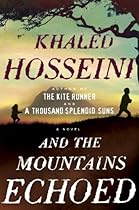
And The Mountains Echoed by Khaled Hosseini

Overall rating:★★★★
The third and latest novel by Khaled Hosseini, And The Mountains Echoed, tells the story of different characters and the turns and detours their lives took. They all have one thing in common: they are related or became in contact with Pari and Abdullah’s involuntary journeys.
Abdullah was Pari’s older brother who felt and exercised the responsibility of a father. Abdullah was seven years older than Pari. Their mother died after giving birth to Pari. Abdullah took care of Pari as a parent would: he fed her, consoled her, played with her…
A series of events took place resulting in Pari and Abdullah being separated for the rest of their lives. It was indescribably painful but life goes on and they had to adjust to their new environment.  It is incredible how many consequences one decision could have! The title could not be more appropriate.
The main story, as well as the secondary ones, is very deep and powerful. The sense of emptiness that Pari and Abdullah separation caused was captured and transmitted superbly to the reader. While I was reading this novel I felt the desolation that the characters must have felt in those years.
Mr. Hosseini takes the readers across different continents and cities; Kabul, Paris, California, Tinos… Life can chance in an instant, people adapt to the new situations, but at the end of the day the love we experienced and knew will never go away… in the worst case it would stay as a ghost or as in Pari’s case as an absence of something vital.
This book is available in hardcover and Kindle.
Originality:★★★★
Use and beauty of language:★★★

Tuesday, July 16, 2013

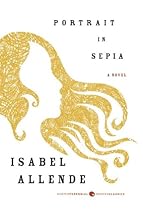
Portrait in Sepia by Isabel Allende

Overall rating:★★★★
Portrait in Sepia is the second book of the unusual trilogy that started with Daughter of Fortune and ends with House of Spirits. Aurora Del Valle decides to write her story and the experiences of the people around her. Aurora grew up with her paternal grandmother, Paulina Del Valle. The events take place between 1862 and 1910.
Paulina Del Valle was not the end-of-the-19th –century typical woman. She had a keen sense of business and made a deal with her husband to have her own bank account in England with the profit her business ventures brought. In a time when women depended completed of the closest male relative this was extraordinary.
Aurora grew up with this model of feminism. With time Aurora was able to become an avant garde woman herself. It is true that the beginning of the 20th century looked promising for women as some rules were relaxed, still it was not well accepted that a woman worked outside the house, had a trade, and even worse, had a lover while still married (divorce did not exist back then).
Portrait in Sepia starts in San Francisco, specifically in Chinatown. Isabel Allende, once more, makes a great job of describing the smells, people’s physical appearance in a way that immediately transported me to where the scene was taking place. From San Francisco, Aurora and Paulina traveled to Europe, and after Paulina’s husband death, back to Chile permanently. Once in Chile, Ms. Allende takes the reader somewhere south of Santiago (I suspect to the Puerto Montt area) where the landscape was generous and paradisiacal.
The connection to the next book, House of Spirits, is a subtle one. Rosa and Clara, Nivea and Severo’s daughters (two of the main characters in House of Spirits) are mentioned once in Portrait in Sepia. I remember when I read this passage the first time. I became a little dizzy with the realization that I was being taken back to where everything started.
This book is available in paperback..
Originality:★★★★
Beauty and use of language:★★★★

Monday, July 8, 2013

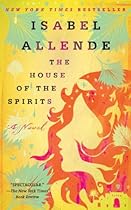
House of Spirits by Isabel Allende

Overall rating:★★★★
House of Spirits was Isabel Allende’s first novel. By coincidence of magic, it became the third book of the unusual trilogy (Daughter of Fortune, Portrait in Sepia, and House of Spirits). In this story, narrated by Esteban Trueba and his granddaughter Alba, we follow the events in the Trueba family, its branches, and the other families connected to them. The events take place, according to my calculation, approximately from 1900 until the military coup to Salvador Allende in the mid 1970s.
This novel tells the story of at least four generations having Esteban Trueba and Clara Del Valle as the central couple. Esteban Trueba is a man who acquired a huge fortune by angrily working first in the gold mines, and later in the farm inherited from his father. Later in his life, Esteban becomes a senator for the Conservative Party. This man is so angry all the time and has so many episodes of wrath that his existence has to be necessarily fictional – a real person would have died of a heart attack much earlier.
Clara Del Valle is an ethereal woman who is more concerned with the whereabouts of spirits than the common activities of the everyday life. She married Esteban and they had three children: Blanca, and twins Jaime and Nicolas. Clara was the center of the family and she gave Esteban the stability that he needed.
This is the second time I read House of Spirits. I liked it as much as the first time. It is a story of love, passion, sensuality, anger, and the desire to change the destiny of a nation and society. Ms. Allende cleverly incorporates important events of the Chilean history giving even more significance to the story.
This book is available in paperback.
Originality:★★★★
Beauty and use of language:★★★★

Thursday, July 4, 2013

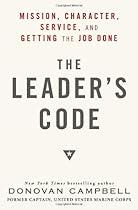
The Leader's Code by Donovan Campbell

Overall rating:★★★
‘The Leader Code’ by Donovan Campbell gives an overview of the 6 virtues that all leaders should cultivate: humility, excellence, kindness, discipline, courage, and wisdom. In addition to developing these qualities, the writer suggests, and I think he is right in doing so, to define a mission and become a servant for the people or teams we lead – I personally prefer the term service provider since servant could be so easily misinterpreted.
Donovan Campbell makes a good attempt at explaining the “leader-servant” model as well as the six traits that all leaders should have. The book is full of stories – too many in my opinion – some of them interesting, some of them not so much.
I liked the idea of creating the mission statement and becoming a service provider for others, especially those we are assigned to lead. The six qualities described in the book – humility, excellence, kindness, discipline, courage, and wisdom – are great to have not only if we have the role of leaders. Not much is new in this book; mostly is common sense, but it is good to have a reminder.
Mr. Campbell is part of the Marine Corps. Most of the stories and examples in the book come from the military. This concentration of source makes the book boring for people, like me, who are not part of the military environment, and frankly does not see it as the greatest organization in the world.
‘The Leader Code’ is a good read for someone who is starting his/her path in self-improvement and to learn about leadership. For seasoned readers on the subject of leadership, it may be repetitive, without substance; for the civilians, it may become boring after the third story about war, battle, or military exercise.
This book is available in hardcover and Kindle.
Applicability to real life:★★★
Comprehensibility:★★★★

Tuesday, June 25, 2013

Daughter of Fortune by Isabel Allende

 
Overall rating: ★★★★
Eliza Sommers came to Rose Sommers’ life under questionable circumstances. Eliza’s origins did not seem to weight as much as Rose would have thought… as soon as she saw the baby in the box wrapped in a man’s sweater, Rose knew her life would change forever. Rose would love and educate Eliza like her own daughter. Nobody in the house of Valparaiso was allowed to question or to tell Eliza how she came to live in the Sommers’ house with Rose and her brother Jeremy.
Eliza grew up between the refined manners of Rose and the smells of Mama Fresia’s (her nanny and cook) kitchen. Eliza developed a keen sense of smell that would preserve her from certain occupations later on in her life. When Eliza turned 16 years old, she met the man that would make her world come upside down. She knew it the minute she smelled him. That man would forever change her destiny and make her understand that things could only be that way.
Daughter of Fortune is the first book of an unusual trilogy. It is the first book but it was not the first one written by Isabel Allende. It seems that the trilogy happened almost by accident in a circle that came back to where Ms. Allende started her career as a novelist. This is the second time I read this book; my goal is to read all three back to back to have the complete story with a good understanding of the families and their relationships.
Daughter of Fortune starts in the beautiful city of Valparaiso (Chile) in the year 1843. The characters’ adventures, fortunes, and misfortunes take us to California during the gold rush – San Francisco, Sacramento, and other smaller cities –, to China, briefly to England, and extensively aboard different ships that navigated the route between Valparaiso and California, New York, and Europe. 
The story is so beautifully written and extraordinary that it would be almost impossible not to fall in love with Rose, Eliza, Tao Chi’en, and some other characters. Others, like Agustin del Valle, would be more difficult to love… but their presence would be fully felt. Daughter of Fortune is a great novel of love, resilience, entrepreneurship, honor, family, and some unusual subjects for the time like female power, interracial relations, and questioning the truth about God and the Catholic church. 
The book is available in paperback.  
Originality: ★★★★
Beauty and use of language: ★★★★

Monday, June 24, 2013

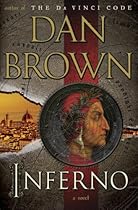
Inferno by Dan Brown

Overall rating:★★★
Robert Langdon wakes up in a hospital room in Florence with a bullet wound in his head and with some days lost out of his memory probably forever. He has strange visions of Hell as described by Dante in his famous classic book The Divine Comedy. Robert cannot remember why and how he arrived in Florence, why or who shot him, and he is supposed to be doing in Florence outside of his usual trips to the Renaissance city. 
All these questions will be answered as Dan Brown walks through the cities of Florence, Venice, and Istanbul. The mystery involves details of Dante’s Divine Comedy especially the poem related to Hell. The villain, obsessed with both the Divine Comedy and world overpopulation, creates the reasons for Robert Langdon being summoned to Florence, for people following both Robert Langdon and our evil man, and gives enough reason for world leaders to worry about his plan. 
Inferno is an entertaining reading. The action is concentrated in 48-72 hours, which can be overwhelming for some people. I personally prefer novels whose stories and action happen in a longer time period to be able to assimilate and enjoy each character and their personal tales. Reading Dan Brown’s book is an entertaining way of reading an encyclopedia. The writer succeeds in picking the readers’ curiosity. Other than that, the novel does not have any other value. The writing is not particularly beautiful and the characters do not have any depth or real philosophical ways to see life. I would expect that a movie would come out based on this book. If I could turn back time, I would wait for the movie instead of reading the book – there would not be a big loss of details or events, it would take less time, and probably the visual effects and photography of such beautiful cities would be more impressive on the big screen than on the pages of Mr. Brown’s books. 
The book is available in hardcover and Kindle.
Originality:★★★★
Beauty and use of language: ★★

Friday, June 14, 2013

A Hologram for the King by Dave Eggers


Overall rating: ★★★★
Alan Clay is 54 years old. He is on the brink of bankruptcy and had to restart his career. Alan is a skilled salesman trained in the time of American manufacturing and door-to-door vacuum cleaner selling strategy. He has not been able to fully adjust to globalization, and to the fact that ‘Made in USA’ is an extinct species.
Alan’s most recent job sent him to the Kingdom of Saudi Arabia as part of a group to present to King Abdhullah a new technology that would allow the Saudis not only to videoconference but to have the other party “in the room” in the shape of a hologram.
Dave Eggers, the writer, does a great job of bringing Alan Clay to life. Even though I am not part of the same generation and life path as Alan, I immediately empathize with his predicaments. It was clear that Alan was going through a midlife crisis. He was lost; he could not clearly see his purpose and next steps.
I particularly liked the description of the everyday life, society, and culture in the Kingdom of Saudi Arabia. KSA is one of those places that is almost mystified by all the restrictions imposed by not only the king but a very rigorous interpretation of Islam. In the book I could clearly perceived the visitor’s constant fear of violating a rule by doing something completely normal like shaking the hand of someone of the opposite gender, and the adolescent behavior of people who by nature want to do all that is forbidden.
Hologram of the King was an entertaining reading. In some passages I would look up and reflect on the situation. The language is simple and clear for the most part, although I came across some words for the first time: stasis (the stagnation in the flow of any of the fluids of the body), asunder (into separate parts or pieces), and juggernaut (large, overpowering destructive force or object).
The end of the book was abrupt. I liked that some questions remained so the reader could imagine more than one possible ending. Mine is a happy one.
This book is available in paperback and Kindle
Originality: ★★★★
Beauty and use of language: ★★★

Thursday, June 13, 2013

Attached: The New Science of Adult Attachment and How It Can Help You Find and Keep Love


Overall rating:  
This book explains adult attachment theory. According to Amir Levine and Rachel Heller’s, the writers, research there are three types of attachment styles: avoidant, anxious, and secured. Each of these style definitions is intuitive. Avoidant people believe that intimacy is a loss of independence; anxious are usually preoccupied with the relationship and worry about the ability of their partner to love them back; and secure people are the ones that feel responsible for providing happiness and stability to their partners, feel comfortable and seek intimacy, usually are warm and loving, and for the most part do not play games.
For me it was very interesting to know about this theory and these attachment styles. The book addresses how to spot each style in the people we meet and how to not let our own attachment style boycott potential good relationships.
Of course the book does not address all questions. For example, I wondered as I read the book, if attachment styles could vary depending on the partner. In other words, was it possible that partner A behaved avoidant with partner B, and secured with partner C? The writers suggest that our attachment style is mostly stable during our adult life, and at the same time, it is plastic meaning that certain behaviors could be modified or controlled to obtain more satisfaction of current or potential relationships.
The message was clear. I believe this book could be helpful for everyone regardless of gender and relationship status. For people in a stable relationship, knowing about attachment style theory could help understand each other, take things less personal, and mold the bad habits so both partners become satisfied in the relationship. For people who are looking for a partner, attachment theory is very useful to on one hand, spot early on those styles that do not match, and on the other hand to know their own symptoms of either preoccupation, desire to flee, or the need to get close, and use / modify them to their advantage in building a new lasting relationship with the correct partner.
This book is available in paperback and Kindle.
Applicability to real life: ★★★★
Comprehensibility: ★★★★

Friday, June 7, 2013

Russian Debutante's Handbook by Gary Shteyngart


Overall rating: ★★
Vladimir is 26 years old working in a non for profit organization that helps immigrants with all sorts of situations. One day an old Russian man with a fan as a companion asks Vladimir to help him obtain the American citizenship. In exchange the old man would put Vladimir in contact with his son in Prava for them to do profitable business together.
Vladimir makes vague promises to the old man with the fan – it is not that easy to become an American. One day a series of events take place and Vladimir had to make the oath ceremony for American citizenship happen for the old man. And Vladimir goes to Prava…
The Groundhog runs the out of the grid business milieu in Prava, the Paris of Eastern Europe. He takes in his debutante, Vladimir and together come up with different ventures earning high profits and even more enemies. Until things went wrong…
It was difficult for me to connect with the story in the book. It seems that the writer’s original idea was a Russian/Easter European mafia novel. It was an incomplete attempt. There was no fluidity in the story, no connection among different events. I kept reading it with hopes of finding a fragment that would make me be more curious and interested in what would happen next – I found it briefly in chapter 32 of 36.
This book is available in paperback and Kindle.
Originality: ★★
Beauty and use of language: ★

Friday, May 31, 2013

The History of Love by Nicole Krauss


Overall rating: ★★★★
Alma Singer is 15 years old. She lost her father when she was 7. Alma and her brother, Bird, live with their mother who is not completely over the death of her husband. One day Alma’s mother receives a request to translate the book The History of Love - her husband valued this book so much that he named their first daughter after the girl in the book. Alma is positive that the story in the History of Love was a real one and that the girl after whom she was named, Alma, really existed. And the search begins…
Leo Gursky, an octogenarian Jewish from Slonim (a small town that was “sometimes in Poland, sometimes in Russia”), lives alone in New York. He lost everything and everyone during the war. The love of his life, Alma, left Slonim before he did. When Leo arrived in New York, he went to look for her only to find out that it was too late.
The History of Love is a book inside a book plus the characters’ stories. Nicole Krauss did an excellent job putting together the different pieces that conform this novel. It is not confusing to read, it is very entertaining, moving, and funny. I imagine that she had to write at least two books to produce this one.
One of my favorite parts of the inner book History of Love was the chapter titled The Age of Silence. In it, Zvi Litvinoff – the character who wrote this book –, explains how during this time humans talked through their hands and how most people looked to fully understand what was said since some gestures could mean two different things. They asked questions until they were sure they got the intended message.
Another favorite, still within the inner book, was How Angels Sleep. The writer suggest that angels don’t dream and that they sleep poorly trying to understand the mystery of humans.
Each character in the novel has a powerful and distinct voice. At the end things may not have ended as each of these characters had expected; however, events unfold in the way they are supposed to happen according to the laws of the Universe… forgiveness, acceptance, and a small doses of insanity go a long way.
This book is available in paperback and Kindle.
Originality: ★★★★
Language: ★★★★

Thursday, May 30, 2013

Give and Take by Adam Grant


Education in the West is geared towards survival, being the strongest, and to take advantage of every opportunity. What happens when someone’s nature is not wired to advance at any cost? Are people whose call is to help and give to the world doomed to always come last?

Adam Grant has a new proposal. In his book Give and Take he describes three main types of people: takers, matchers, and givers. He explains that usually in our personal lives we operate as givers or matchers; however, in our professional environment we normally operate as matchers – i.e. I give/help in the same measure and to the people from whom I receive benefits. 
Adam Grant explains that there is a taboo in the corporate world regarding givers since they are perceived as pushovers and weak. Even givers themselves tend to be in the closet disguised as matchers to survive in the work place.

Give and Take provides a refreshing and a healthy way to come out of the closet and be a giver at full speed without being a softy or weak. Adam Grant explains how givers make everyone around them and themselves successful; they show us that there is a larger pie to be shared and the more we pay it forward the greater this pie becomes.

I greatly liked Give and Take. First, it clearly describes a subject that is mostly talked about behind closed doors. Second, Adam Grant’s proposal offers healthy channels to give and pay it forward. Finally, it has practical guides to avoid becoming weak, spent, and taken advantage of insatiable takers.

As I read the book I asked myself what was my style. I think I am a mix of matcher and giver both in my personal and professional lives. I have an acute sense of justice so if I come across with a taker I would give only once. I learned how to spot takers, other ways to deal with them, and new and more open ways to give without the feeling of being negatively judged.

Some of the phrases that caught my attention:

“The true measure of a man is how he treats someone who can do him absolutely no good.” Samuel Johnson.

“It is well to remember that the entire universe, with one trifling exception, is composed of others.” John Andrew Holmes.

“How do I know who I am until I see what I do? E.M. Forster


This book is available in hardcover and Kindle.

Tuesday, May 28, 2013

Top Ten Wednesdays (TTW) - Covers

I have bought books that I thought would be exciting as their covers suggested an interesting story, love, mystery, or simply something new. In most cases, fortunately, I ended up liking the book and more recently using it as part of my home décor. 

All of us grew up hearing the phrase never judge a book by its cover. Today, however, for the first top ten Wednesday I would like to do something similar to that: judge the book cover. Here I would like to share with you the ten covers that I personally like the most. The criteria for selection is purely personal based on the emotions that surfaced when I saw or bought the specific book. How about you? What are the book covers that moved you? I’d love to know.

1.Life of Pi – Illustrated version

First, I liked the tiger and the majesty that conveyed in the illustration. The image of such great animal made me think of the Indian subcontinent. I imagined a story involving the tiger, placed in India or somewhere in that region, and of someone having to tame the tiger. Farfetched?

2.Harry Potter Half-Blood Prince
I am a big fan of all Harry Potter books. When I saw the cover of this book I expected that Dumbledore, the older man in the picture, would show Harry some important memories in the Pensieve (artifact owned by Dumbledore that allowed seeing and be transported to someone’s past experiences) that could provide some clues as to who the half-blood prince was. What could be more exciting than being able to relive someone’s memories?

3.American Dervish

When I saw the boy in this cover I immediately thought of a story about immigrants. He seemed to me lonely, lost, with a past that was important to him, and faced with the difficult task of inevitably having to move forward. Part memoir part introspection?


The woman in this picture belongs to a different era, to a time when the only color in pictures was sepia. She is alone and not shy to look at the camera. This woman appeared strong and used to receive attention. I inevitably expected the story of a woman too advanced for her time as well as the recollection of more simple times when the only options for a picture were black and white or sepia.


As I saw the cover of this book I was ready to be immersed in a story in an exotic place with a woman as the main character. Her eyes look sad but determined, which made suppose a novel involving hardship, endurance, and huge amounts of determination. The quest for freedom?


The picture in this cover struck me as very powerful. The boy is utterly alone next to a woman (his mother?) who is completely out of this world. I expected a story about abandonment, neglect, and loneliness. Could it be that the woman who was supposed to take care of him was physically somewhere else? Or was it mentally?


When I saw the cover of this book I contemplated a memoir. The little girl in the cover is looking at the three adults in the back – two of them may be her parents. It is an interrogative look, which being part of the young woman’s thoughts, may reflect a series of past events that just happened in a time when she was able to understand that something was going on but not old enough to see the full picture.


Looking at the landscape of this cover, I cannot help but feel totally alone. Not much is as sad as the sight of a beach on a stormy day. My expectation from the cover was that this was a sad story although not a desperate one – somehow the picture conveys a ray of hope or at least acceptance. The path that seems to go from the observer to the sea made me consider an intimate narration.


This cover has to be closely observed. Just as an enchantress, there is an air of mystery and exoticism. By the shape of the woman’s arms I expected a story placed in the Middle East, or at least involving Arabs. The cover does not show her entire body, which made think of a life interrupted.

10.Bhuda


When I saw the monk in the cover of this book, giving his back to the observer, I thought about renunciation and the start of a new path. Although we cannot see his face there is an implicit invitation to follow him. The halo around his head made me presume that there could be something better ahead, something even divine waiting for him and me, if I dared to go along.


No Excuses by Brian Tracy


This book is powerful, easy to read and to understand (even for those whose English is not their first language) and it has lots of practical advise that can be immediately put in place. I liked the fact that the author explained the power of self-discipline in all aspects of life. Some may find it contradictory (how does self-discipline help you to have the good life?) but after understanding the main concepts, it makes a lot of sense. Regardless of your personal philosophy, it is definitely a book to be read more than once and to be used for consultation.
For the advance self-improvement reader and overachiever, this book may not offer new concepts; however, I found the practical applications helpful and to the point.
This book is available in paperback and Kindle.

Friday, May 24, 2013

Girl with the Pearl Earring by Tracy Chevalier


Griet is a 15-year old girl who is forced to work to help sustain her family after her father lost his sight. She is hired in the household of the famous painter, Vermeer. Her most important task is to clean his study without upsetting the order of his brushes, colors, paintings, and scenes.
Vermeer is a particular artist obsessed with the effect of light and shadow, and with creating the most exquisite colors from natural elements to produce a more realistic effect on his paintings. Vermeer discovers Griet’s acute sense of color and beauty and teaches her the art of mixing and creating colors from diverse materials. A master-apprentice relationship secretly started, but unfortunately it would be to the detriment of one of them.
Tracy Chevalier is one of my favorite writers. I love that her stories bring to foreground women in different trades instead of the often male-dominated nobility. Girl with the Pearl Earring is no exception.
It is not easy to describe paintings with words - not only the scenes in a particular piece but also the colors, shades, light effect, and people’s expressions. Tracy Chevalier, in my humble opinion, did a great job describing Vermeer’s paintings without overshadowing Griet’s story.
This book is available in paperback and Kindle

Thursday, May 23, 2013

Little Bee by Chris Cleave


Little Bee is an African refugee who somehow made it to England from Nigeria. As many like her, she suffered directly the loss of her family and the abuse of the soldiers. Sarah was a normal English woman, with a normal marriage, and a normal job… until she went to Nigeria and her life irreversibly altered. Sarah and Little Bee had a life changing experience that started in the same source like two tributaries of the same river.
Little Bee is a very strong novel from Chris Cleave. The story is much more than another one talking about the troubles refugees face and how countries in the West are, for the most part, indifferent to their pain. Chris Cleave does a great job bringing to life these characters from two, not only geographically, but emotionally different worlds - their lives perpetually intertwined.
I loved the book and, in my humble opinion, I think it is fantastically well-written. As I read the story I thought of how weak and insensitive immigration policies could be; how, in the West, we cannot even start to imagine the pain and ordeal people in other parts of the world suffer still today. Even though this is a work of fiction, it reflects the reality of countries consumed by war, corruption, and scarcity. One day, we may have a more civilized world, and perhaps there will be no more refugees, and all of could keep all our fingers.
This book is available in paperback and Kindle.

Wednesday, May 22, 2013

Extremely Loud and Incredibly Close by Jonathan Safran Foer


Extremely Loud and Incredibly Close tells the story of Oskar Schell’s journey, in his own voice, to look for the lock belonging to a key he found in a vase that belonged to his father. Oskar is nine years old. By the way he talks one could easily think he was at least thirteen.
Jonathan Safran Foer, the writer, does a great job linking the stories of the characters that surround Oskar’s life. His father is very present and he could be easily confused as the main character. I loved the man who could not talk and tattooed his hands with the words ‘yes’ and ‘no’.
The characters in this book have a great depth in their feelings and experiences. Even Oskar in his short life managed to develop a character formed only by the hardest of sufferings. I enjoyed how Oskar was a walking encyclopedia and how his naivete helped him connect with complete strangers.
This book is available in paperback and Kindle.